EDUCATION
NOS Binnenland
Not three but eight days of food needed at home, researchers warn
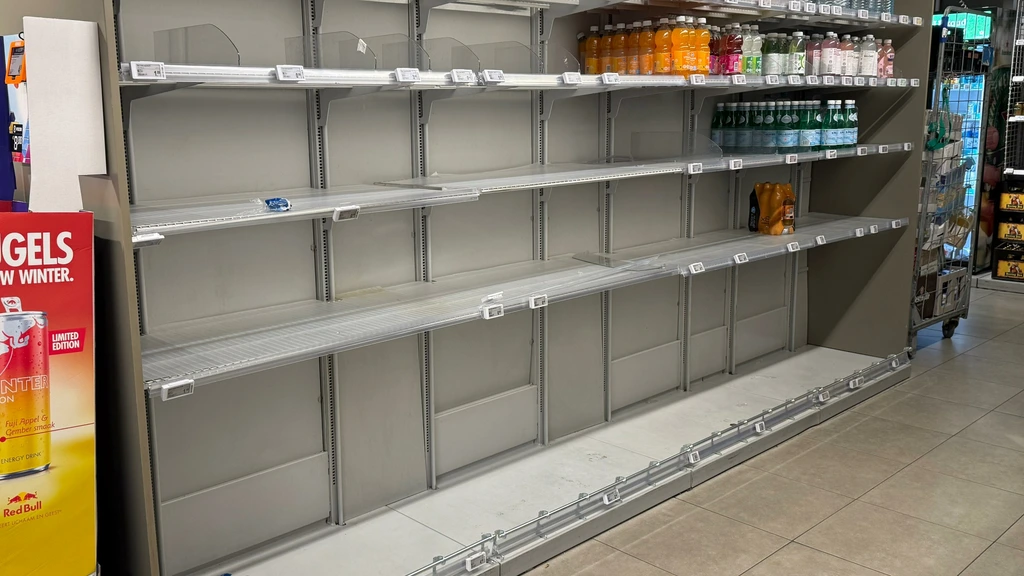
The Dutch should build up a larger emergency stockpile of food than is currently advised: for eight days instead of three. This is what researchers from the Clingendael Institute and Erasmus University say who have looked at food security in our country on behalf of the Ministry of Agriculture. Our supermarkets and suppliers are now operating so efficiently that there are hardly any supplies for emergencies, they warn.
Share
Full article
The Dutch should build up a larger emergency stockpile of food than is currently advised: for eight days instead of three. This is what researchers from the Clingendael Institute and Erasmus University say who have looked at food security in our country on behalf of the Ministry of Agriculture. Our supermarkets and suppliers are now operating so efficiently that there are hardly any supplies for emergencies, they warn. Empty shelves can occur within two to three days if, for example, a cyber attack occurs in the logistics system of supermarkets. Even in severe severe weather or even war, the food supply can stagnate. The government therefore recommended having food at home for three days earlier, but eight days would be better. This mainly concerns long-lasting, high-calorie and preferably directly edible products, such as cans of beans, because the preparation of hot meals can be difficult in the event of major power outages. "Now we assume that after a few days the supermarkets can be supplied with food again," explains researcher Pieter Zwaan, "but in heavy rainfall, an area can be closed off for longer, which can make it last longer." The report recommends that the government also make agreements with supermarkets and suppliers to always have a minimum emergency quantity in their existing warehouses. Supermarkets and suppliers often have as little stuff as possible in their warehouses to save costs. This means that empty shelves quickly arise in the event of large congestion. It is not necessary for the government itself to store huge mountains of grain, which could spoil. Instead, the researchers advise supermarkets to maintain a dynamic emergency stock to be held. Then it acts as a buffer that goes along with normal sales and thus does not spoil. The Netherlands is one of the largest agricultural exporters in the world. Nevertheless, we are dependent on foreign countries for many basic products. For example, we import large quantities of animal feed such as soy, but also fertilizer and fuel. Poultry farmers and pig farmers in particular are likely to have to phase out quickly in the event of a prolonged crisis. researchers do not immediately speak of famine, "but of acute scarcity of specific products, significant price increases and social unrest". The government should pay companies a fee for such an emergency buffer, the researchers advise. In return, the government is given the right to determine where the food goes in emergency situations. State Secretary Erkens van Voedselzekerheid wants to spend the next few months in talk to supermarkets and suppliers to see what is really needed to have in stock and who will pay for it. He cannot yet say what it would cost the government. At a supermarket in Nijmegen, customers respond calmly to the message. “We're good to go now,” says a man who just came out with a full shopping cart. “I think a week and a half. I don't know if this is an emergency stock i usually have fresh vegetables, so I don't have cans of beans at home yet.“ He's not the only one. Another woman estimates that she can hold out for a month: "That started once because I got sick and couldn't go shopping. Then I had to turn on my network and that was super awkward, so I started doing things differently.“ But that doesn't apply to everyone. A woman who has yet to go grocery shopping admits that she "nothing" at all. “It's actually very wise to do so. You usually assume it's unnecessary, which is why I haven't done it yet.”
Related stories